
Are Dachshunds Good For First Time Dog Owners?
Rocky was our first dog, so I can answer this one from experience: yes, dachshunds can be good first dogs, but they’re not necessarily an easy first dog.
Before getting Rocky, we’d both grown up around dogs but had never been solely responsible for one ourselves. We did plenty of research beforehand and thought we knew what we were getting into.
Some things turned out exactly as expected. Others definitely didn’t.

Dachshunds are funny, affectionate and incredibly characterful little dogs, and I wouldn’t change our decision to get one. But they can also be stubborn, noisy, difficult to train and very attached to their owners.
If you’re thinking about getting a dachshund as your first dog, these are the things I’d want to know beforehand.
Dachshunds have a lot of personality
It’s difficult to explain quite how much personality can fit inside such a small dog until you’ve lived with one.
Rocky is affectionate, funny, nosy and incredibly expressive. He likes being involved in whatever we’re doing and has very definite opinions about how his day should be organised.
That’s one of the things we love most about dachshunds.
They’re companionable dogs and can form extremely close relationships with their owners. Rocky loves being with us, whether that’s going for a walk, travelling somewhere new or simply finding the warmest spot in the house to sleep.
The flip side is that this attachment can create challenges of its own.
They don’t always like being left alone
This was probably one of the biggest things we underestimated.
Dachshunds can become very attached to their owners, and Rocky has struggled with separation anxiety.
When he was younger, we assumed leaving him alone was something he’d simply get used to. In reality, it required much more careful training and management than we’d anticipated.
Not every dachshund will develop separation anxiety, but I would think seriously about how a dog fits into your normal routine before getting one.
If everyone in the household is regularly out for long periods, a dachshund may not be the easiest choice.
And if you work from home, don’t assume that automatically solves the problem. It’s still worth teaching a puppy from an early age that being alone for short periods is normal.
Dachshunds can be stubborn to train
Dachshunds are intelligent, but intelligence and willingness to do what you’re asking are two very different things.
Rocky learns things quickly when there’s something in it for him.
Getting him to reliably do those things when he’d rather be doing something else is another matter.
They were bred to work independently, so a certain amount of determination comes with the territory. Positive, reward-based training and consistency have worked best for us.
If you’re expecting the sort of dog that lives to follow instructions, a dachshund may test your patience.
That said, being a first-time owner doesn’t mean you can’t train one. You just need realistic expectations and a willingness to put the work in.
Toilet training can take patience
This deserves its own mention because dachshunds have a bit of a reputation for being difficult to toilet train.
Rocky certainly wasn’t completely reliable overnight.
Consistency made the biggest difference for us: taking him outside frequently, giving him plenty of opportunities to go in the right place and rewarding him when he did.
Bad weather can make things particularly interesting. Convincing a dachshund that they should leave a warm house to go outside in the rain isn’t always easy.
They can be surprisingly loud
Small dog. Surprisingly big bark.
Dachshunds were bred to alert and they can be very vocal. Rocky is particularly keen to let us know when somebody approaches the house, a delivery arrives or something suspicious happens outside.
Sometimes that suspicious activity is simply another dog walking past.
Barking is something I’d take into account if you live in a flat, have very close neighbours or simply want a particularly quiet dog.
Training can help you manage excessive barking, but I’d go into dachshund ownership expecting some noise rather than assuming you’ll train it out of them completely.
Socialisation is really important
This is another area where, looking back, I think we could have done things differently with Rocky.
He can be reactive towards unfamiliar dogs, and managing that has become part of our life with him.
Good socialisation isn’t simply about making a puppy meet as many dogs and people as possible. It’s about giving them positive, controlled experiences with different people, dogs, environments, sounds and situations while they’re young.
If I were getting my first dachshund again, this is one of the areas I’d put even more thought into from the beginning.
You need to think about their backs
One thing most prospective dachshund owners will encounter very quickly is intervertebral disc disease (IVDD).
Because of their body shape, dachshunds are predisposed to spinal problems. That doesn’t mean every dachshund will develop IVDD, but it is something you need to know about before choosing the breed.
For us, that means being conscious of Rocky’s weight and fitness and trying to make sensible decisions about his everyday environment.
I’d also recommend looking into pet insurance before bringing your puppy home rather than waiting until there’s a problem. As with any breed, pre-existing conditions can affect what an insurer will cover.
They’re more active than they look
It’s easy to look at those little legs and assume dachshunds don’t need much exercise.
Rocky would disagree.
He loves going out for walks and exploring somewhere new. While exercise needs vary depending on age, health and the individual dog, I wouldn’t choose a dachshund purely because you want a dog that requires very little activity.
They’re small enough to curl up on the sofa afterwards, but there’s still a proper dog underneath the sausage-shaped exterior.
They’re incredibly affectionate
For all the challenges, this is a huge part of why we love the breed.
Rocky wants to be close to us. Usually very close.
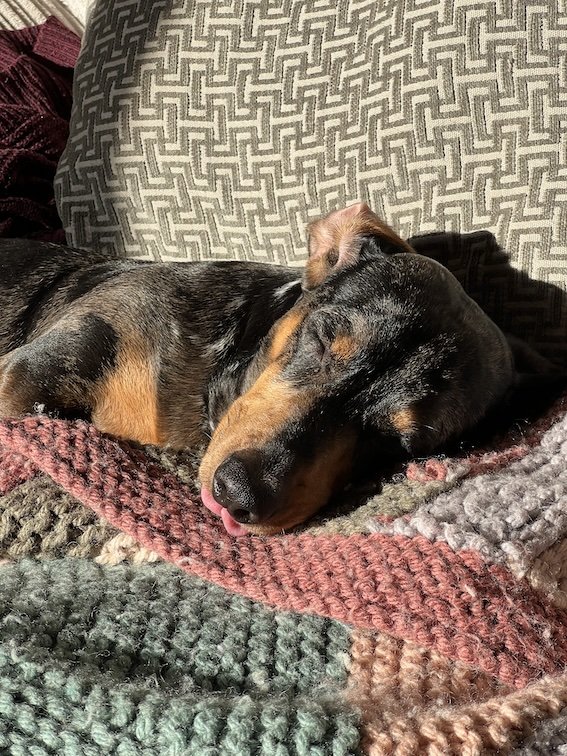
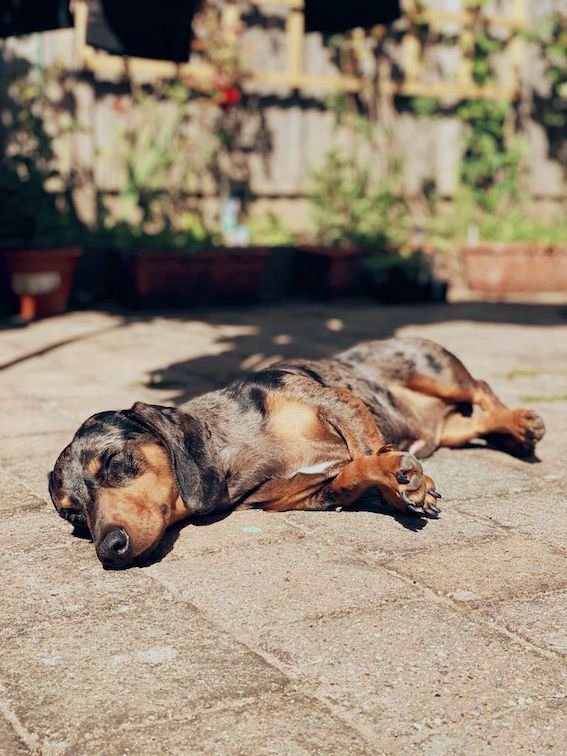
If there’s a blanket available, he’ll be underneath it. If one of us is sitting down, there’s a good chance he’ll be trying to sit with us. And if there’s a patch of sunshine somewhere in the house, he’ll probably have claimed that too.
If you want an independent dog that largely does its own thing, that level of attachment might not suit you.
We love it.
So, should your first dog be a dachshund?
I don’t think being a first-time dog owner should put you off getting a dachshund.
Rocky was our first dog and, knowing everything we know now, we’d still choose him.
But I also wouldn’t recommend choosing the breed just because they’re small and cute.
Be prepared for a dog that can be stubborn, vocal and intensely attached to you. Toilet training might take longer than you’d hoped. You may have to work on separation, barking or reactivity. And their predisposition to back problems is something you need to take seriously throughout their life.
In return, you get an incredibly funny, affectionate little dog with far more personality than seems physically possible.
For us, the positives have always outweighed the difficult bits.
Just don’t mistake small dog for easy dog.