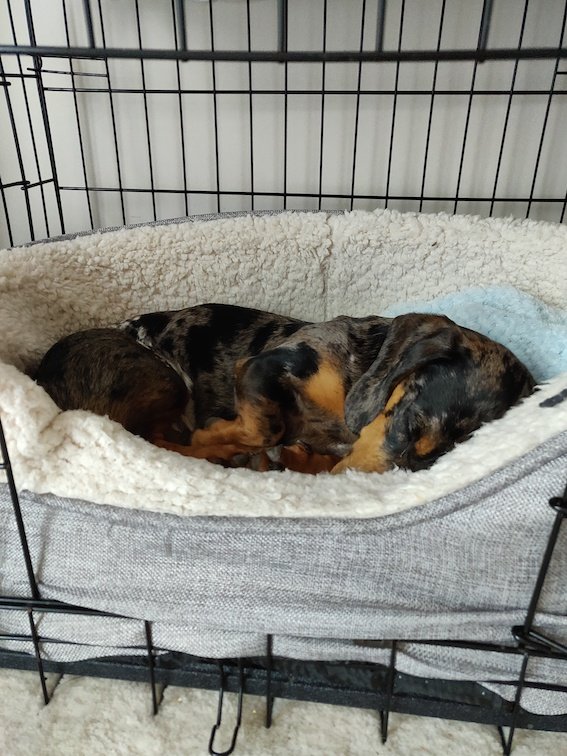

How to Toilet Train a Dachshund Puppy
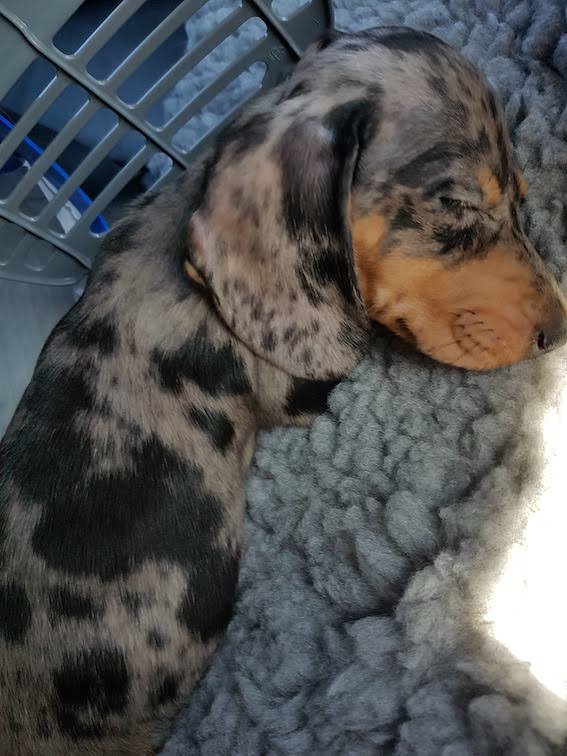
Dachshunds have a reputation for being difficult to toilet train, and after raising Rocky from a puppy, I can understand where it comes from.
They’re intelligent enough to understand what you want surprisingly quickly. The harder part is convincing them that the rules still apply when it’s cold, raining or they’d simply rather not go outside.
We got there with Rocky, but it took consistency, patience and a lot of trips into the garden.
If you’re currently toilet training a dachshund puppy, the most important thing I’d say is don’t expect it to happen overnight. Accidents are part of having a puppy and don’t mean that you’re doing something wrong.

Start toilet training straight away
We started as soon as we brought Rocky home.
The aim was to make going outside feel completely normal from the beginning rather than allowing him to develop a habit of going indoors and trying to change it later.
With a young puppy, that means giving them lots of opportunities to go outside.
We took Rocky out:
- As soon as he woke up
- After eating or drinking
- After playing
- After a nap
- Before bed
Any time he started showing signs that he might need to go
And, particularly at the beginning, at regular intervals between all of those.
It can feel like you’re constantly opening the back door, but the more opportunities your puppy has to get it right, the easier it is to reinforce the behaviour you actually want.
Learn the signs your dachshund needs the toilet
One of the most useful things you can do is learn your puppy’s behaviour just before they go.
With Rocky, we’d look for things like suddenly becoming distracted, sniffing the floor, circling or wandering away from whatever he’d been doing.
As soon as we spotted the signs, we’d take him outside.
You’ll inevitably miss some. Over time, though, you start recognising your own dog’s particular signals.
Use the same toilet spot
When Rocky was a puppy, we took him to the same area of the garden each time.
This helped establish what that particular trip outside was for rather than turning every toilet break into an opportunity to spend 20 minutes investigating the garden.
Try not to immediately rush your dachshund back inside the second they’ve finished, either. Some dogs can learn that going to the toilet means outdoor time ends, which isn’t particularly helpful if they enjoy being outside.
Reward them when they get it right
When Rocky went to the toilet outside, we rewarded him straight away.
The timing matters. You want your puppy to associate the reward with what they’ve just done, rather than giving them a treat several minutes later once you’re back indoors.
Food worked particularly well for Rocky because, like many dachshunds, he’s highly motivated by the possibility of being fed.
Praise can work too, but we’d keep it positive without turning it into such a huge celebration that we distracted him halfway through what he was doing.
What should you do when your puppy has an accident?
Clean it up and move on.
If you actually catch your puppy beginning to go indoors, calmly interrupt them and take them outside to finish. If you discover a puddle afterwards, there’s no benefit in telling them off because they aren’t going to understand why you’re suddenly angry.
We certainly never rubbed Rocky’s nose in an accident or punished him for one.
Instead, we’d look at why we’d missed it. Had it been too long since his last trip outside? Had he just eaten? Had we missed him sniffing around?
Most of the time, an accident meant we needed to adjust what we were doing rather than expecting a very young puppy to somehow know better.
Clean the area thoroughly afterwards. An enzymatic pet cleaner can help remove the remaining odour rather than simply making it smell clean to us.
And then there’s rain…
This is where having a dachshund makes toilet training particularly entertaining.
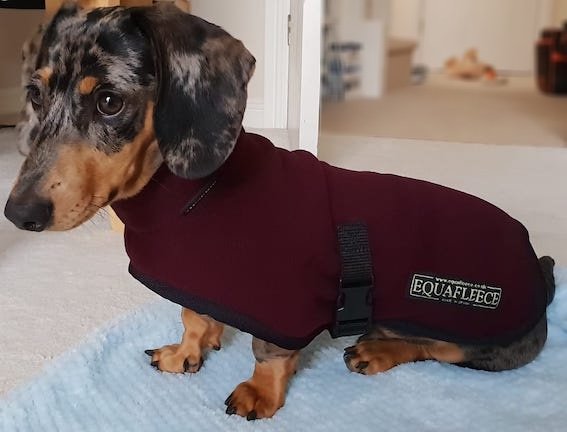
Rocky isn’t exactly enthusiastic about going outside in bad weather.
If your puppy happily goes into the garden on a sunny afternoon but suddenly appears to have forgotten everything they’ve learned when it’s pouring with rain, you’re definitely not alone.
We found persistence was really the answer. We’d still take Rocky outside and give him the opportunity to go rather than letting bad weather become an automatic excuse to toilet indoors.
A sheltered area close to the house can make life easier if you have the option.
Should you use puppy pads?
We preferred teaching Rocky to go outside rather than relying heavily on puppy pads.
Pads can obviously be useful in certain circumstances, particularly if you live somewhere where getting a young puppy outside quickly isn’t practical.
The potential downside is that you’re initially teaching your puppy that going to the toilet inside is acceptable and may then need to transition them away from the pads later.
If your ultimate aim is outdoor toileting and you can safely take your puppy outside regularly, that’s the habit I’d personally concentrate on from the beginning.
What about overnight?
Very young puppies can’t necessarily make it through an entire night without needing the toilet.
We made sure Rocky went outside immediately before bed and took him out if he woke and appeared to need to go.
Keep nighttime toilet trips boring. Outside, toilet, back to bed.
You don’t particularly want your dachshund discovering that waking you at 3am results in an exciting play session.
As their bladder control develops, most puppies are gradually able to go for longer periods overnight.
How long does it take to toilet train a dachshund?
There’s no reliable number of days or weeks.
Some puppies pick it up quickly, while others take considerably longer before they’re completely reliable. Even a puppy who seems to have understood can occasionally have an accident.
Rather than deciding they’re toilet trained after a certain amount of time, I’d look for a consistent pattern of:
- Going to the toilet outside
- Beginning to signal when they need to go
- Staying clean indoors for increasingly long periods
- Making it through the night as they get older
And don’t be surprised by the occasional setback.
Why has my previously toilet-trained dachshund started having accidents?
If an adult dachshund who’s normally reliable suddenly starts going to the toilet indoors, I wouldn’t automatically assume it’s a training problem.
Changes in routine, stress or difficulty getting outside can affect behaviour, but there can also be medical reasons for changes in toileting.
If the behaviour is new, frequent or accompanied by other symptoms, speak to your vet so they can rule out an underlying problem.
The same applies if your puppy is urinating unusually frequently, seems uncomfortable or you’re otherwise concerned about their health.
Our biggest toilet-training lesson
The biggest thing we learned from toilet training Rocky was that consistency matters far more than trying to find a clever trick.
Take your puppy outside frequently. Learn their signals. Reward them immediately when they get it right. Don’t punish accidents. And accept that, for a while, you’ll spend an extraordinary amount of your life standing in the garden waiting for a tiny sausage dog to have a wee.
It does get better.
Rocky is now reliably toilet trained, although his enthusiasm for going outside when it’s raining hasn’t improved quite as much.